Understanding Prosocial Education

Think of prosocial behavior as the opposite of antisocial behavior. Antisocial behavior harms others or disrupts a social group, whereas prosocial behavior is behaving in ways intended to benefit others, like being kind, helpful, polite, respectful, and cooperative (Bergin, 2018, p. 2). 

Prosocial Education refers to educators intentionally helping students become kinder with each other and more engaged in learning at school. Teachers find that they enjoy teaching more as students become more prosocial. 

Why Prosocial Ed?

The Four Pillars of Prosocial Education

Multiple projects at the lab provide professional development to teachers. We focus on 4 strategies, which we call the pillars of prosocial education:

  1. Replacing power assertive discipline with inductive discipline.
  2. Praising children when they are prosocial.

These first two pillars are the foundation for the next two pillars:

  1. Building positive teacher-student relationships.  
  2. Creating emotionally upbeat classrooms.

These strategies are based on 50 years of developmental psychology research, showing that how adults interact with children influences their development of self-control, empathy, and prosocial behavior.

Praise

  • Builds intrinsic motivation
  • Replaces tangible rewards
  • Strengthens relationships

Inductive Discipline

  • Gives students a reason
  • Discipline as a teaching moment
  • Builds empathy

Teacher-Student Relationships

Emotionally Upbeat Classroom

  • Better emotional regulation
  • Greater motivation
  • Happy people learn more

The Foundations of a Prosocial Classroom

Pillar 1: Praise

The Power of Person-Focused Praise

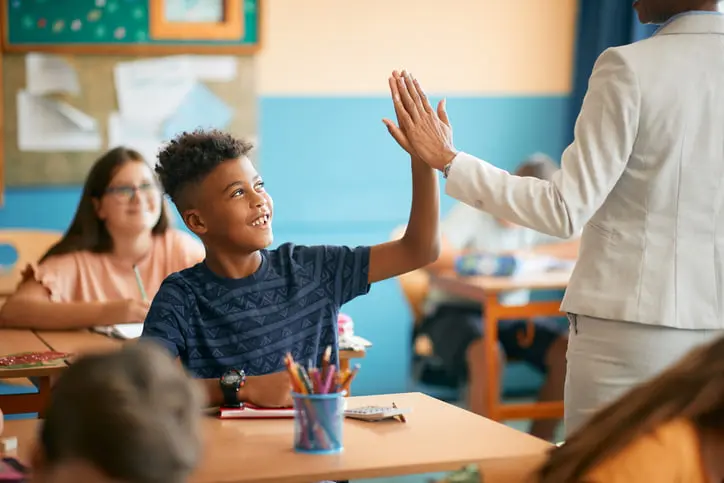
Praise is powerful; expressing appreciation transforms the way students feel about themselves and their teacher and is one of the top 5 most effective strategies for reducing common behavior problems (Morin, 2024). To promote prosocial (caring, respectful, collaborative) behavior among students, we suggest teachers praise the person rather than the act. Praise can also be non-verbal such as thumbs-up or high-five (Bergin, 2018, pg. 107-115). 

For Example:

“I saw you help Derek; you are a thoughtful classmate!”

Happy Black Elementary Student And His Teacher Giving High Five During Class At School.

Balancing Praise and Reprimands for Better Behavior

Most of us praise less than we realize, and reprimand more than we realize. For example, a study in 5 middle schools found a praise-to-reprimand ratio of 1:4 to 1:9 (Caldarella et al., 2020). In this study, for a couple of months teachers worked to increase their praise. As they did so, students became more engaged in learning, and had less disruptive behavior. The positive effects were biggest for students at risk of emotional/behavioral disorders. If teachers achieved a 1:1 praise-to-reprimand ratio, challenging students’ grades increased from a D to a C. 

How Praise Shapes Student Identity

ProsocialEd staff help teachers use more praise, and make that praise person-focused to increase prosocial behavior. Students are vulnerable to believing what adults tell them about themselves–for good or ill. Thus, when you tell a student they are kind, compassionate, thoughtful of others and helpful they will come to believe it and live up to that belief (Bergin, 2018, p. 110).

Caldarella, P., Larsen, R. A. A., Williams, L., Downs, K. R., Wills, H. P., & Wehby, J. H. (2020). Effects of teachers’ praise-to-reprimand ratios on elementary students’ on-task behaviour. Educational Psychology, 40(10), 1306-1322. https://doi.org/10.1080/01443410.2020.1711872 

Morin, A. (2024, June). The power of effective praise: A guide for teachers. Understood. https://www.understood.org/en/articles/effective-praise-guide-for-teachers

Challenge Yourself:

Monitor your praise and reprimand. Work to increase your use of person-focused, specific praise.

Pillar 2: Inductive Discipline

Primary Teacher Help Little Boy With Homework After Lesson

The Role of Power in Student Discipline

A common form of discipline in schools is power assertion. This involves the adult relying on their power, authority, or control of resources to externally control the student’s behavior. Examples include giving red cards, keeping in from recess, using time out, or escalating up to suspension.  There is an implied “or else” clause to power assertion – “do X, or else Y will be done to you.” Power assertion isn’t necessarily punishment oriented; it can involve “rewards” or bribes to get students to behave better (e.g., you get jaybird points if you don’t disrupt the class) (Bergin, 2018, pg. 62-65).

Using Reason and Empathy in Discipline

Inductive discipline refers to the adult giving a student a reason for obeying a directive or abiding by rules. It uses discipline as a “teaching” moment, setting firm, high expectations for appropriate behavior without resorting to threats. When students see a clear and valid reason for a rule, they are more likely to comply.  Other- oriented induction is a form of induction that focuses the student’s attention on their victim (Bergin, 2018, p. 60).

For Example:

“We don’t use that kind of language because it hurts others’ feelings. How would you feel if someone said that to you?”

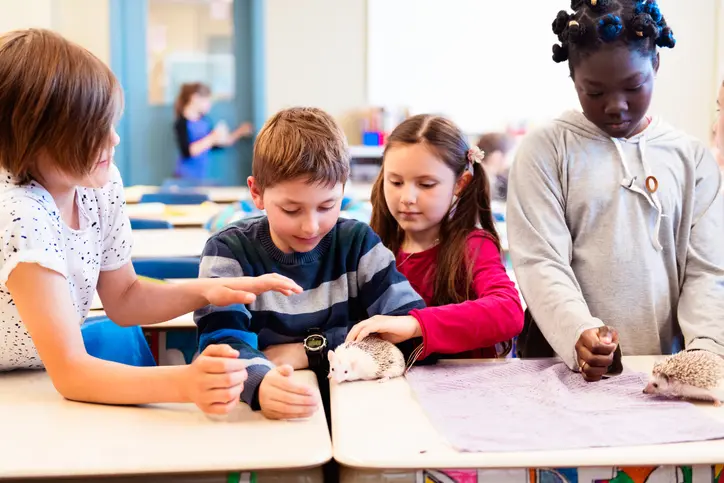
Presentation Of Cute Hedgehogs In The Classroom By Schoolgirls

Building Self-Control Through Inductive Discipline

These two forms of discipline have very different outcomes. Chronic use of power assertion undermines students’ development of self-control, and increases anger and rebellion, among other negative outcomes. Inductive discipline has the opposite effect.  It leads to development of self-control and  internalization of your values.  Use of other-oriented induction builds empathy. Thus, if you have students who seem out of control, this is a powerhouse strategy for helping them learn self-control. ProsocialEd staff help teachers use more induction, and provide practical, effective strategies for when students refuse to comply.

Pillar 3: Teacher-Student Relationships

The Power of Teacher‑Student Relationships

Positive teacher-student relationships have a very large effect on academic performance. “Effect size” is a research term used to describe the significance and meaning of research findings. The effect size of teacher-student relationships is even more significant than the effects of classroom size, curriculum choices, and decisions regarding instructional practice (Bergin, 2018. p. 124).

Teacher-student relationships matter because students are better able to regulate their emotions in classrooms where they have a positive relationship with the teacher. They have less frustration learning new things, work harder and learn more. They are more compliant with teacher requests and cooperative during instruction. They also tend to be more compassionate toward their peers.

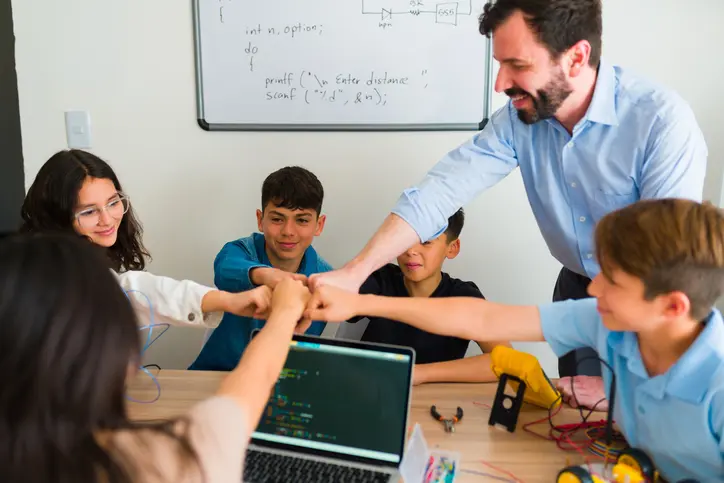
Group Of Teen Students Celebrating Finishing Coding A Program

Pillar 4: Emotionally Upbeat Classrooms

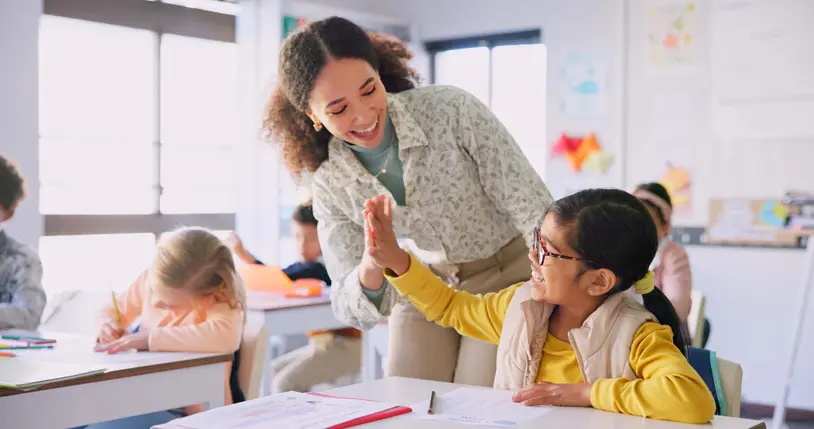
Teacher Woman, High Five Girl And Classroom With Achievement, Success And Mentorship For Learning. Education, Development And Students With Goals, Knowledge And Books With Celebration At School Desk

Fostering Positive Emotions for Student Success

Negative emotions can interfere with thinking and learning.  Students unable to regulate their emotions may develop depression or anxiety disorders, which are very common, and interfere with success in school. Teachers, counselors, and schools can make a difference by fostering positive emotions. Happy students learn more and are more prosocial; and the more prosocial students are, the more positive and upbeat the classroom climate will be (Bergin, 2018, p. 148-152). Positive emotions catalyze creativity, problem-solving, and critical thinking. 

View our Channel

YouTube